

Wayfinding shaped with the hospital from bid stage
The New Footscray Hospital opened to patients on 18 February 2026. Delivered as a Public Private Partnership, the project represents an investment of more than A$1.5 billion, approximately £793 million, €925 million and US$1.08 billion at current mid-market rates. The hospital provides more than 500 inpatient beds and expands healthcare capacity across Melbourne’s west.

Project
New Footscray Hospital
Client
Multiplex
Collaborators
Cox Architecture
Billard Leece Partnership
Tract
Location
Melbourne, Victoria, Australia
Size
Project Build Cost
More than A$1.5 billion (approximately £793 million, €925 million and US$1.08 billion)
Focus
Wayfinding Strategy
User Experience & Service Design
Inclusive & Universal Design


Planning movement before construction
Humanics joined the project during the bid stage, working with the architects, health planners and delivery team while the hospital’s circulation and movement logic were still being developed.
This early work addressed arrival points, entrances, public circulation, vertical connections and the organisation of destinations. It allowed wayfinding requirements to inform the planning of the hospital and gave the design team a clearer basis for testing how patients and visitors would move through the building.


Hospital Street as the organising route
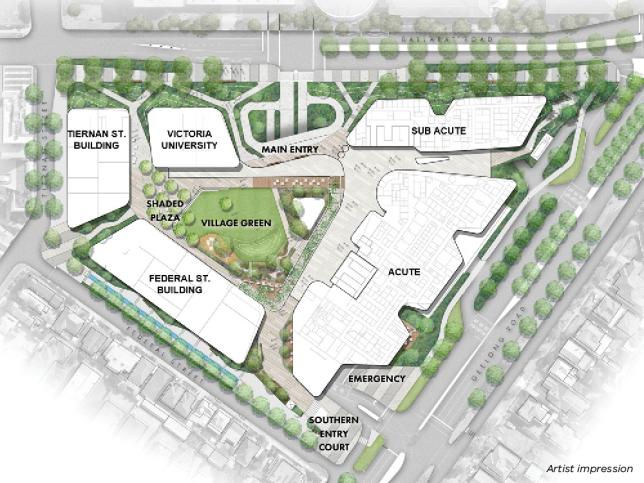
Each entrance connects with Hospital Street, the main pedestrian route wrapping around the central green space and linking the hospital precinct. Humanics used this route as the backbone of the public wayfinding system.
Destination hierarchy, decision points and signage placement were developed around the complete patient and visitor journey. This includes arriving from surrounding roads or public transport, identifying the correct entrance, reaching the main lifts and moving from public circulation into individual departments.

Designed for an unfamiliar journey
Patients and visitors often arrive with limited knowledge of the building and may be under significant stress. The strategy focused on what people can see, the information they need at each point and the places where hesitation or wrong turns are most likely. Humanics remained involved through design development and delivery, maintaining the relationship between the early movement strategy, the architecture and the completed wayfinding system.


