

One wayfinding logic across a new tower and an existing hospital
Peninsula University Hospital opened to patients on 20 January 2026 following the A$1.1 billion redevelopment of Frankston Hospital, approximately £582 million, €679 million and US$788 million at current mid-market rates. The Public Private Partnership delivered a new tower with 12 levels of clinical services, a new main entrance, 130 additional beds and 15 operating theatres.

Project
Peninsula University Hospital
Client
Lendlease
Collaborators
Bates Smart
Conrad Gargett
WSP
Waterman AHW
Location
Frankston, Victoria, Australia
Size
Project Build Cost
A$1.1 billion (approximately £582 million, €679 million and US$788 million)
Focus
Wayfinding Strategy
Wayfinding Design
User Experience & Service Design


Movement planning from bid stage
Humanics joined the project during the bid stage and worked with the architects, health planners and delivery team on circulation and movement logic while the hospital was being planned.
The work covered arrival from the surrounding precinct, the operation of the new main entrance, major public routes, vertical circulation and the organisation of destinations. These decisions established the structure that the signage system would later support.

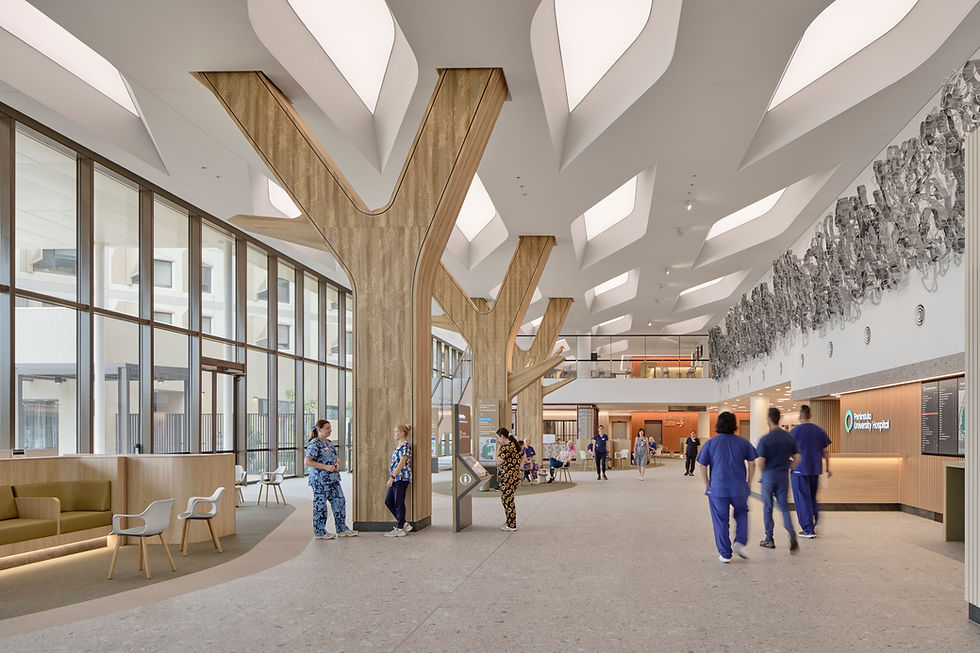
Connecting new and existing facilities
The new clinical services tower forms part of an operational hospital campus that has developed over many years. Patients and visitors need a consistent wayfinding logic across the new tower, retained buildings and refurbished areas.
Humanics developed that logic around the complete journey. The strategy coordinates terminology, destinations, routes and information across building boundaries so people can understand the hospital as a single environment.


A clearer public arrival
The redevelopment creates a stronger main entrance and a more legible public circulation structure. The wayfinding reinforces these elements with information placed around the decisions people make when entering the hospital, finding the correct lift group and continuing to clinical destinations. Humanics’ involvement from bid through design and delivery kept movement planning, architecture and signage aligned as the project progressed.


