


Why we use Environmental Psychology at Humanics Collective

Updated: Jan 1
Because shaping environments works better with evidence.
When we work on a hospital, a transport hub, or a civic precinct, there’s no room for assumptions or personal taste. What worked somewhere else won’t necessarily work here. To get it right, we need to understand how people actually behave in a space, and why.
That’s where environmental psychology comes in. It’s the science of how environments influence human behaviour, perception, and decision-making. We use it to ground our recommendations, challenge assumptions, and shape outcomes that make sense in the real world.
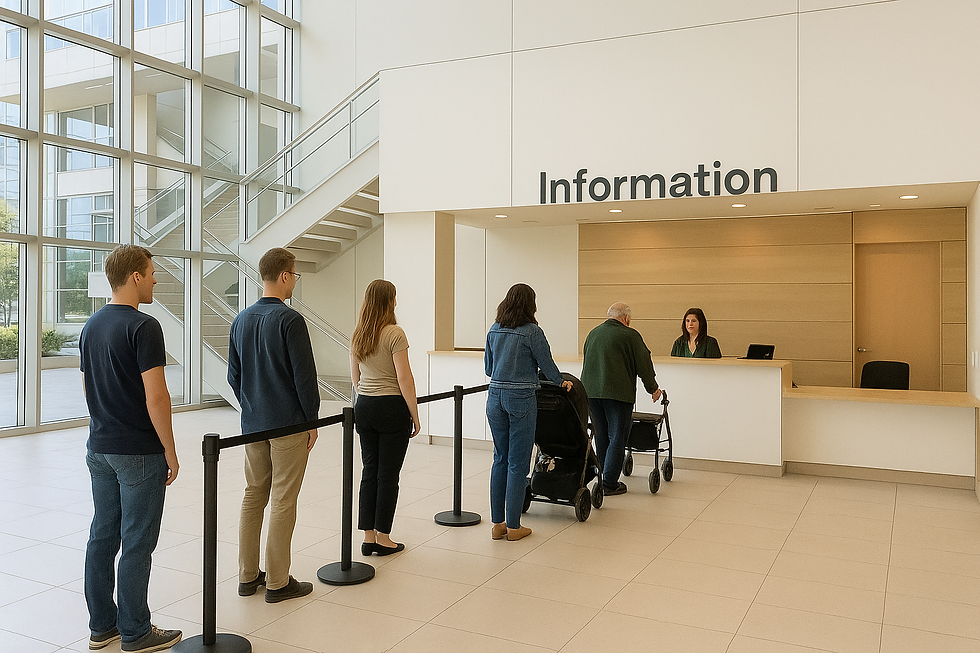
How we move from opinion to insight
Environmental psychology helps us move past what feels right and focus on what works.
We ask things like:
What cues are people using to find their way?
What’s their state of mind? Are they focused, stressed, or distracted?
Does the environment help them make a decision, or slow them down?
Are people behaving the way the system intended?
We look at safety, clarity, comfort, and how people respond to different layouts, materials, and spatial cues. We also look at systems, services, and journeys. When does someone give up? When do they get frustrated? Where do they need reassurance, or a nudge in the right direction?
We don’t aim for environments that just look intuitive, we build in the conditions that actually make them intuitive.
Why Environmental Psychology matters early
Bringing ES into the project from day one means better decisions and fewer surprises.
It helps us:
Spot issues before they become complaints
Support design decisions with evidence
Align user needs with the goals of the organisation
Create environments and services that encourage the right behaviour, without needing signage or instruction
We use established models like cognitive mapping, affordance theory, and stress recovery theory because they’ve been proven to work. Not in theory, but in practice.
Designing behaviour into the environment
This approach helps us guide outcomes like:
Faster wayfinding and reduced search time
Lower stress and confusion
Increased safety and situational awareness
Better dwell time and flow
Stronger engagement with services
More equitable and inclusive experiences
Behaviour change in high-stakes settings (e.g. infection control, queue management, staff-customer interactions)
We’ve used environmental psychology to reduce aggression in public service spaces, improve participation in health screening programs, and encourage movement through digital and physical touchpoints in multi-step service journeys.
The goal is always the same: help people do what they need to do comfortably, safely, and with ease.
Why clients bring us in
Environmental psychology gives our clients more than insight. It gives them clarity.
It helps project teams feel confident in their decisions, especially when there’s pressure from executives, operations teams, or the public. It’s a way to reduce risk, improve performance, and make sure spaces and services work the way people need them to.
This is one of the reasons we combine services like user experience design, service design, and wayfinding. It’s hard to get good outcomes in isolation. Environmental psychology helps us connect the dots so people, places, and systems work better together.


